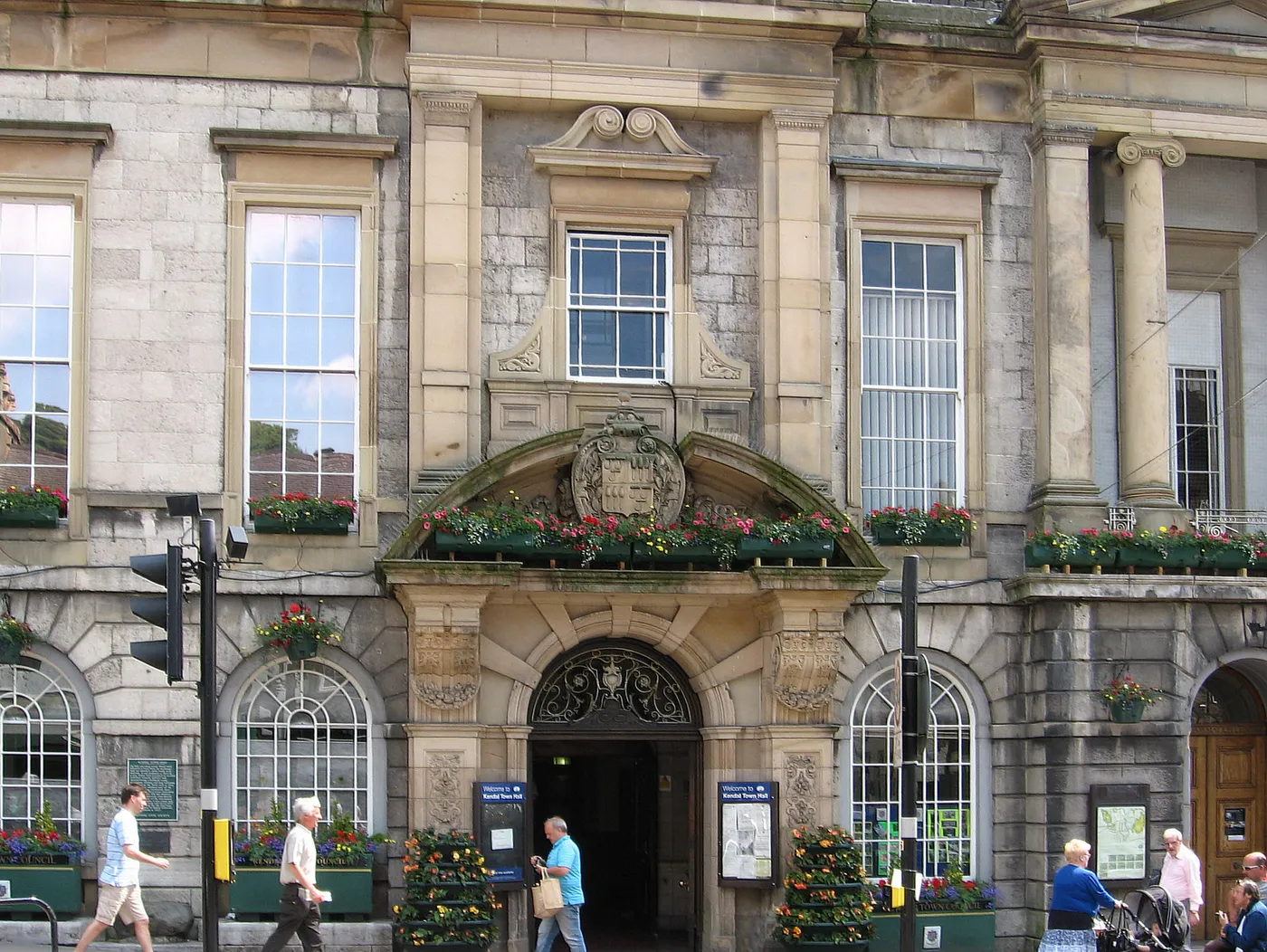

South Lakeland's planning committee is dissolved on 31 October. Most Kendal applications go to officers, and councillors lose the power to call them in.
The committee of councillors that decides Kendal’s bigger planning applications is being abolished. From Saturday 31 October Westmorland and Furness Council will have one Planning Committee of 13 members for the whole council area, from Appleby to Barrow. The South Lakeland Local Area Planning Committee, the Strategic Planning Committee and the Eden and Barrow committees all go. (Council news release, 9 October 2026)
The bigger change is who decides at all. New national rules mean most applications must be decided by council officers. The rest go to officers too unless two people, the council’s chief planner and the committee chair, agree a scheme is significant enough for councillors. (Town and Country Planning (Discharge of Local Planning Authority Functions) (England) Regulations 2026)
Full Council agreed the changes on 24 September. The report to councillors said that failing to act “could result in non-compliance” with the regulations and “potential legal challenge to planning decisions”. (Report to Council, 24 September 2026)
What goes where from 31 October
The regulations, signed by the housing and planning minister Matthew Pennycook on 15 July, sort applications into two schedules.
| Type of application | Who decides from 31 October |
|---|---|
| Householder extensions and alterations | Officers, always |
| 1 to 9 homes on a site under half a hectare | Officers, always |
| Minor commercial development | Officers, always |
| Discharge of conditions, non-material amendments, lawful development certificates, prior approval | Officers, always |
| Reserved matters (detail) on an outline permission for under 500 homes | Officers, always |
| 10 or more homes, or any larger scheme | Officers, unless referred to the committee |
| Listed building consent, advertisement consent, works to protected trees | Officers, unless referred to the committee |
| Retrospective applications | Officers, unless referred to the committee |
| Applications by the council, a councillor or an officer | Officers, unless referred to the committee |
Source: Schedules 1 and 2 of the 2026 Regulations, and the council’s own summary in its report to Full Council.
A referral needs two things. The council’s “nominated officer” and “nominated member” must both agree, and the scheme must meet at least one of two tests: it raises “an economic, social or environmental issue of significance to the local area”, or “a significant planning matter” against the development plan. If the two cannot agree, officers decide.
Government guidance tells councils the presumption is delegation, and that applications should “only exceptionally be referred to committee”. It adds that a scheme which “broadly complies with a detailed site allocation” in the local plan is unlikely to pass the second test. (Planning Committees and the National Scheme of Delegation: guidance, MHCLG, 1 June 2026)
Councillors lose the call-in
Until now a ward councillor could “call in” an application so that the committee decided it rather than an officer. The council’s report says this “will no longer exist”, and that referral triggered by a number of objections is not allowed either. The guidance is explicit: councils keeping those practices in their constitutions risk judicial review of their decisions.
What the council has decided:
- the nominated officer is the Development Management Service Manager, with the area managers as substitutes
- the nominated member is the chair of the new Planning Committee, with the vice chair as substitute
- the committee has 13 members, the maximum the regulations allow, split 7:3:2:1 between the parties; the old committees had eight members each
- all members and reserves must complete training and a competency assessment before sitting
- a record of every case considered for referral, and the reason for the outcome, is to be reported to the committee annually and published online
- the right to comment on applications and the public-speaking arrangements at committee do not change
(Report to Council and Appendix A, 24 September 2026)
The council’s report puts the saving from cutting three committee chairs’ allowances at £23,507 a year. It also lists two risks: that communities “perceive a reduction in local democratic representation”, and that a single agenda for the whole council area “becomes overloaded”.
What it means for Kendal
- Kendal is outside the national park, so this applies to every application in the town. The Lake District National Park Authority, which decides planning in Windermere, Ambleside, Grasmere, Coniston and Hawkshead, is exempt from the national scheme and keeps its own committee.
- Recent Kendal decisions would have looked different. The 160 homes at Kendal Parks were voted through by the Strategic Planning Committee on 17 September. The Arnold Clark self-storage scheme went to the South Lakeland committee on 10 September. From 31 October, both would have reached councillors only if the chief planner and chair agreed.
- Pending: 143 homes west of High Sparrowmire. Persimmon’s application, on an allocated site, is still with officers. Our report on it explains why the allocation matters under the new tests.
- If you object to an application, write to the case officer as before. Objections still count as material considerations. What they no longer do is force a committee hearing, however many there are.
- If you want a scheme heard in public, the route is to persuade the nominated officer and the committee chair that it meets one of the two tests. The council says its procedure for that “will be worked up over the coming months”. We will report the first list of referrals when it is published.
The regulations must be reviewed by the government by 31 October 2028.
Sources: council news release, 9 October 2026; report to Full Council, 24 September 2026 and its Appendix A; SI 2026/854; MHCLG guidance, 1 June 2026.
Have your say