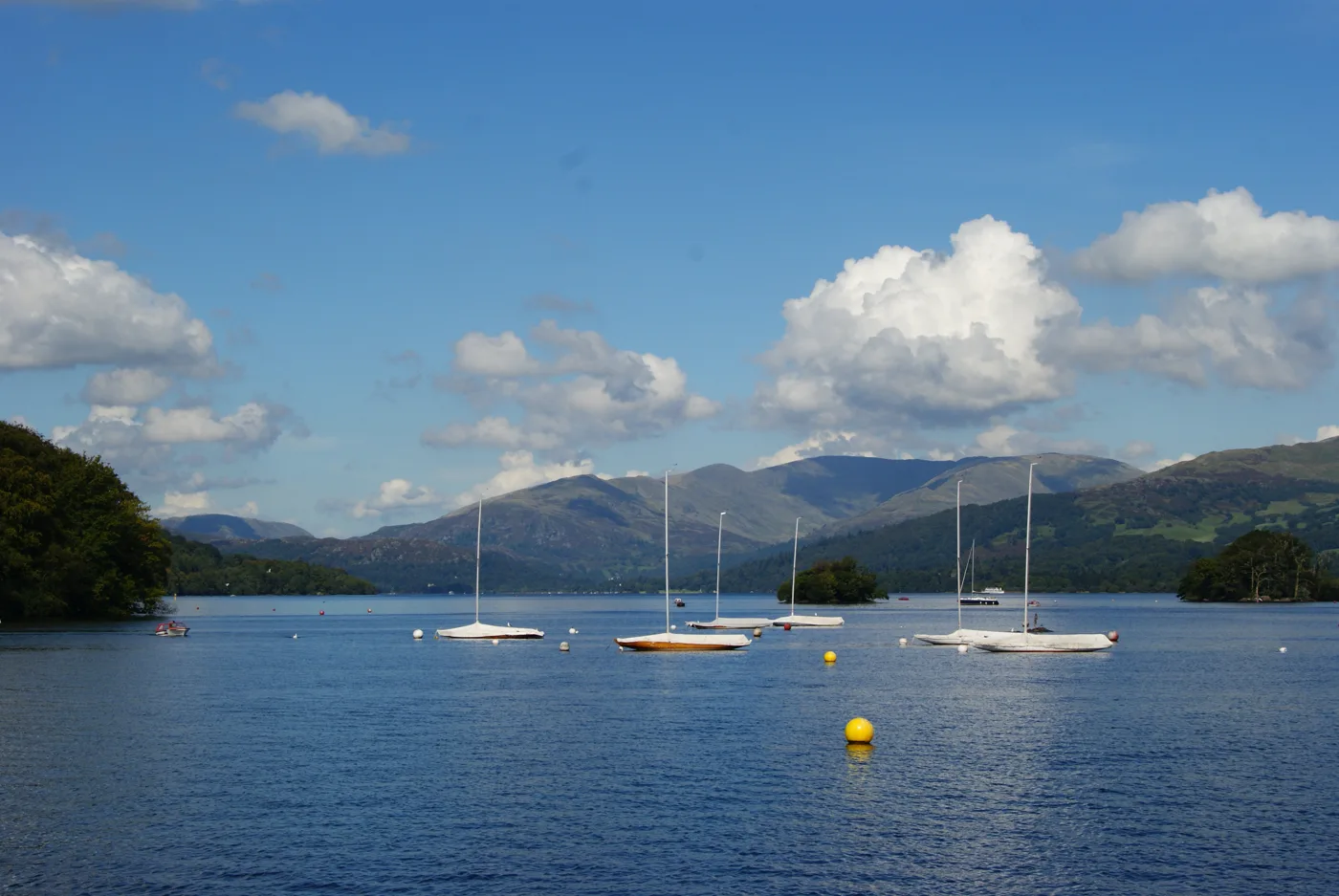

A £3.6bn to £3.7bn plan would take all wastewater out of Windermere through a new tunnel and connect 12,800 people to sewers. It is a study, not a decision yet.
Every drop of wastewater could be kept out of Windermere by a new tunnel and up to 138km of new sewers, at a cost of £3.6bn to £3.7bn. That is the finding of a feasibility study published on 21 October by a coalition that includes United Utilities, the Environment Agency and Westmorland and Furness Council.
The aim is in the project’s name: Only Rainwater into Windermere. The study says it is technically possible. It is not yet a decision, and no one has agreed to pay for it.
The details below come from United Utilities’ release of 21 October, published on behalf of the whole coalition.
Who is behind it
Six organisations make up the coalition:
- the Environment Agency
- the Lake District National Park Authority
- Love Windermere
- Save Windermere
- United Utilities
- Westmorland and Furness Council
Its independent convener is Edward Twiddy, who said: “This is ambitious. It is different.”
What the study proposes
The study ran for 15 months. It looked at more than 70 possible solutions and narrowed them to two preferred options. Both would catch wastewater before it reaches the lake. Both would carry it through a new tunnel to new treatment works away from Windermere.
The release says the scheme could mean:
- up to 138km of new sewerage network
- 35km of highway runoff caught before it reaches the water
- 37 hectares of sustainable drainage
- up to 75% more wastewater infrastructure across the catchment
- about 12,800 people connected to public sewers for the first time
That last figure matters around the lake. The release says “thousands of homes, cottages, campsites and hotels remain unconnected to the main sewer network”. Many rely on septic tanks or small private treatment plants.
The release does not say where the new treatment works would be built, or name the two options, and the full report is not linked from it. We will add the detail when the report itself is published.
The cost, and the alternative
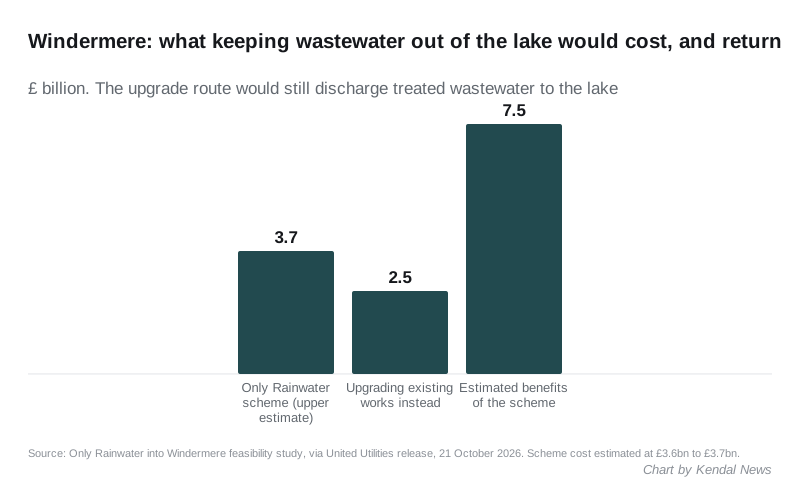
The study puts the investment at £3.6bn to £3.7bn. Its economic assessment puts the benefits at about £7.5bn, or roughly £1.90 for every £1 spent.
Doing nothing is not free either. The release says about £2.5bn would otherwise be needed to upgrade the existing works and sewers. Under that route, treated wastewater would still go into the lake.
When it could happen
Not soon. The release describes a seven-year construction programme. That would only start after detailed design, planning, environmental assessment and regulatory approval.
The coalition says it would use “extensive underground tunnelling to minimise disruption for local communities”. It gives no timetable for any of the stages before construction.
The release says the benefits would reach beyond Windermere, to Grasmere, Rydal Water, Elterwater, Esthwaite Water and Blelham Tarn. It also proposes a skills academy in Cumbria.
What they said
Louise Beardmore, chief executive of United Utilities, said: “This is about far more than infrastructure.”
Matt Staniek, founder of Save Windermere, said “eliminating sewage pollution will tackle the most significant controllable cause of the problems we are seeing today”.
Councillor John Murray, Westmorland and Furness Council’s Cabinet member for climate, biodiversity and regulatory services, said the project “presents a fantastic chance to effect real and significant positive change”.
Steve Ratcliffe of the Lake District National Park Authority stressed that “this is a feasibility study rather than a final decision”.
What it means for you
- Nothing changes yet. This is a study. There is no planning application, no funding and no start date.
- Who decides comes next. The coalition is asking the government, regulators and others to work with it on design, planning and funding. The release does not say how the scheme would be paid for, or what it would mean for water bills.
- If your property is not on mains sewers near the lake, this is the part to watch. Connecting about 12,800 people is one of the scheme’s biggest pieces of work.
- Expect years of planning first. Any works near you would follow detailed design and environmental assessment, which have not started.
For other works on the roads around the lake, see Kendal roadworks this week. For planning decisions across the district, see our Kendal planning news.
Have your say